How Heavy Equipment Transport Services Work in San Mateo County
Construction projects in San Mateo County run on tight schedules.
Crews count on excavators, loaders, skid steers, and drilling rigs showing up on time and ready to go. When equipment arrives late or gets damaged on the way, the whole job can stop dead in its tracks.
So how do heavy equipment transport services actually work?
This guide breaks down the full process of heavy equipment hauling in San Mateo County. You will see how planning, permits, loading, transport, and delivery all come together to keep your construction project moving.
What Are Heavy Equipment Transport Services
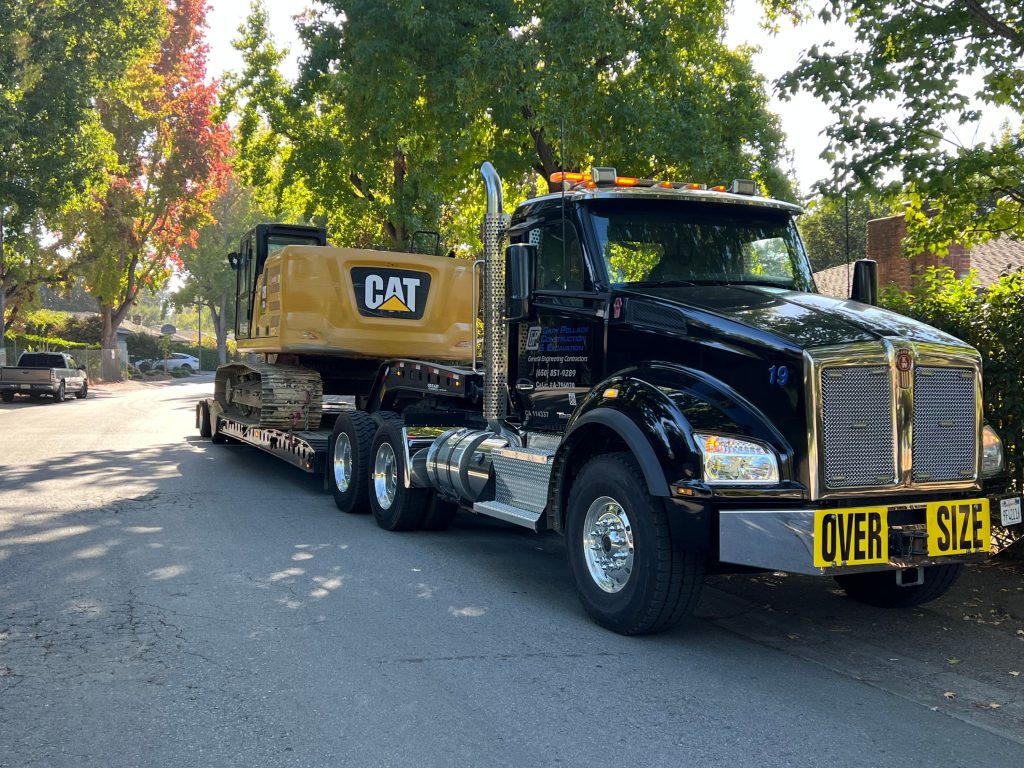
Heavy equipment transport services move large construction machinery from one place to another. That includes equipment like excavators, backhoes, loaders, trenchers, compactors, and drilling rigs.
This is not the same as regular freight shipping. Construction equipment hauling often deals with oversized loads. Many machines go over the standard height and weight limits set by the California Department of Transportation. That means special trailers, permits, and safety steps are needed.
Professional machinery transport services help contractors skip the fines, delays, and safety headaches. They bring trained drivers, the right trailers, and secure tie-down systems built for heavy loads.
Step 1: Planning the Equipment Haul
Every good heavy equipment transport job starts with solid planning.
The first thing to do is measure the equipment. Height, width, length, and weight all need to be confirmed. Even a small difference in height can change which route is allowed.
Next comes picking the right trailer. Common choices include:
- Lowboy trailers for tall or heavy machinery
- Flatbeds for lighter equipment
- Roll back trucks for smaller loads and short moves
After that comes route planning. In San Mateo County, drivers have to work around narrow streets, hillside neighborhoods, bridge clearances, and traffic on Highway 101 and Interstate 280.
If the load goes over California size limits, oversized load permits are required. Some cases also call for escort vehicles. Good planning keeps last-minute problems from blowing up your schedule.
Action Tip: Always give your transport company accurate equipment specs. Guessing on weight or size can cause permit problems and schedule setbacks.
Step 2: Safe Loading and Securement
Once planning is done, the next step is loading the machinery onto the trailer.
Safety is the top priority here. Operators use ramps or hydraulic trailer systems to load equipment slowly and evenly. Weight has to be spread correctly across the axles.
After loading, the crew locks down the equipment using chains and binders that meet federal cargo securement standards. Every tie-down point gets checked before the truck rolls out. A typical safety checklist covers:
- Trailer brake and tire inspection
- Checking that the load is balanced
- Chain tension check
- Final walk-around inspection
Proper securement protects the equipment and keeps other drivers on the road safe.
Step 3: Transporting Heavy Equipment Through San Mateo County
Moving heavy equipment through the Bay Area takes real experience.
San Mateo County has busy city streets, residential zones, and steep terrain. Drivers have to handle tight turns and shifting traffic throughout the day.
Oversized load transport may need escort vehicles to help manage lane changes and alert other drivers.
Weather matters too. Rain affects braking distance and road grip. Skilled heavy equipment hauling professionals adjust their speed and timing to stay safe.
Keeping clear communication between the driver and the project manager helps everyone stay on top of arrival times and any possible delays.
Step 4: Delivery and Job Site Offloading
The last step is getting the equipment off the truck safely at the job site.
Before unloading, the driver checks that there is enough room to maneuver. A spotter may guide the operator during offloading.
The equipment is slowly backed down or lowered using trailer hydraulics. After placement, the team does a quick check to confirm nothing got damaged in transit. Delivery usually wraps up with:
- Confirming the final placement location
- Reviewing the equipment condition
- Signing delivery paperwork
Proper unloading protects both workers and machinery.
Why Hiring a Local Equipment Transport Company Matters
Working with a local equipment transport company in San Mateo County comes with clear benefits.
Local teams know the regional road rules and permit requirements. They know how to plan routes around construction zones and high-traffic areas.
Response times are usually faster, too. If a schedule changes, a nearby hauling provider can adjust quickly.
For contractors who already need excavation, demolition, or grading services, picking a company that handles equipment transport under the same roof can simplify coordination and cut down on downtime.
Common Questions About Heavy Equipment Transport
How much does heavy equipment transport cost?
Pricing depends on distance, weight, size, permit needs, and escort requirements. Short local hauls cost less than long-distance oversized moves.
How long does construction equipment hauling take?
Local jobs within San Mateo County can often wrap up the same day. More complex loads that need permits may take longer because of processing time.
Do I need permits to move my equipment?
If your machinery goes over California size or weight limits, permits are required. A professional heavy equipment transport service takes care of that process for you.
What insurance should a hauling company carry?
Look for proper licensing, cargo insurance, and liability coverage. This protects your investment if something unexpected happens.
Ready to Move Your Equipment? Contact Gary Pollack Construction & Excavation
Heavy equipment transport involves a lot more than tossing a machine on a truck.
The process covers planning, measuring, pulling permits, loading safely, skilled hauling, and careful delivery. When it all gets done right, construction equipment hauling keeps your project on schedule and your machinery protected.
Gary Pollack Construction & Excavation serves San Mateo County with experienced, dependable heavy equipment transport. Whether you need equipment moved for an excavation job, demolition project, or grading work, the team is ready to help.
Get in touch with Gary Pollack Construction & Excavation today to talk through your project needs and set up reliable equipment transport that keeps your crew moving.